
Your best salesperson doesn’t work for you
Complex B2B deals are won in meetings you will never attend, by a champion with a lot to lose. Most marketing is built to persuade that person. It should be built to arm them.
- Section
- Strategy
- By
- Simon Lodge
- Published
- 18 November 2026
- Reading
- 5 min read
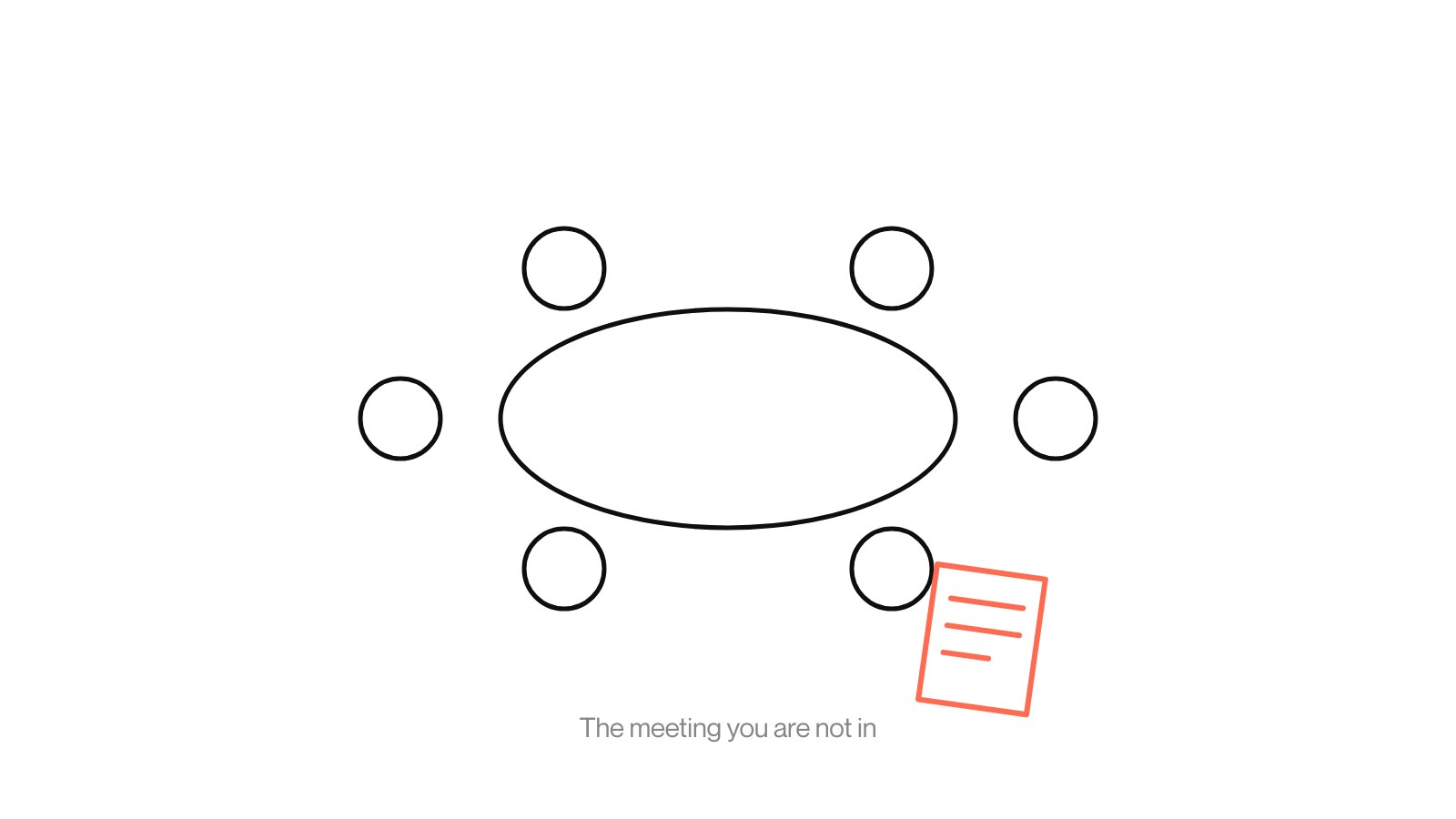
The most important sales conversation about your product happens in a room you are not invited to. Someone who doesn’t work for you leads it. They also have very little to gain and quite a lot to lose. That room is the buying committee, and the person speaking for you is your champion.
Your champion found you and likes you. Now, though, they have to sell you upwards and sideways to people who will never see your website.
Gartner’s research put the typical buying group for a complex purchase at six to ten decision makers. Each one arrives with four or five pieces of information they gathered alone. Meanwhile, buyers spend only about 17% of the whole journey meeting suppliers, and any one supplier gets a fraction of that.
So the conclusion is uncomfortable. Most of the persuasion that decides the deal is done by someone else, using whatever you gave them.
Your B2B champion is scared
We tend to picture the champion as an enthusiast. The research, however, suggests a nervous one.
Karl Schmidt, Brent Adamson and Anna Bird studied around 600 buyers for Harvard Business Review. They found that half of the people willing to buy would not back the purchase in public. Up to half also worried about losing respect if it went wrong. In fact, 12% feared for their jobs.
The same study found that personal value moved these people five times as much as business value. That means things like looking like a better leader, or helping a career. Yet nearly everything vendors hand over is business value: ROI models, feature grids and cost tables.
Those answer one question: is this a good product? The champion’s real question is different. If I put my name to this and it goes wrong, what happens to me?
The most telling number is this one. Eighty per cent of the champions in that research wanted help from suppliers to explain the value of what they were championing. In other words, they asked for a script. Most suppliers sent a brochure instead.
The second reader on the buying committee decides
The person your champion has to convince is often in finance now. For example, G2’s 2026 Buyer Behavior Report found that nearly half of buyers had seen their CFO veto a deal in the past year. The team had already approved each one. Finance involvement in software buying also rose from 31% to 46% in a single year.
That reader won’t take your word for anything. Wynter surveyed finance leaders at SaaS companies with more than $50m in revenue. Of those, 58% said they don’t trust vendor ROI figures, and 56% build their own. One described the process precisely: “Typically I start with what the team provides me and then I do research on my own to verify.”
So notice what that means. The CFO’s first impression of you is your champion’s retelling, plus whatever survived the forward. Your homepage, your launch video and your best sales lines arrive second-hand, if at all.
The deal is decided by the person who wasn’t in your meeting, reading the thing your champion forwarded.
Contradiction is the real competitor
When that second reader finds two versions of your story, they tend to choose the safer course. Gartner found that buyers facing plenty of contradictory information were 153% more likely to settle for a smaller, safer purchase.
Contradictions are common, too. In Gartner’s 2025 survey, 69% of buyers had noticed gaps between a supplier’s website and what its sellers said (Gartner).
As a result, the loss often isn’t to a competitor at all. It’s no deal. Matthew Dixon co-wrote The JOLT Effect, which drew on more than two and a half million sales calls. He has said that between 40 and 60% of deals end with the customer doing nothing. He also says fear of making a mistake drives more of that than loyalty to the old way.
Forrester tells a similar story. It found that 86% of B2B purchases stall at some point, with 13 people involved on average. So picture a frightened champion and a sceptical CFO, each holding a slightly different story. That is how a good product loses to inaction.
Build the kit, not the pitch
Marketo understood this a decade ago. The same HBR piece describes how it gave champions a 100-page toolkit. The kit walked them through what the CEO, CMO, CFO and CIO would each worry about, and how to answer.
You don’t need a hundred pages. Still, you do need to stop designing materials only for the first reader.
First, write one page your champion can forward without editing. It should make sense to a stranger. It should state the problem in the buyer’s language before yours, and carry the one sentence you want repeated in the meeting. If it needs a voiceover to land, it won’t survive the forward.
Next, give finance something to check rather than something to believe. That means a plain account of what it costs, what it replaces and how you would measure success. Show the assumptions, too, so they can change them. After all, a CFO who distrusts vendor ROI models is telling you what they want: the inputs, not your answer.
Lower the risk of saying yes
Answer the champion’s private question out loud. What happens if it goes wrong? Show the exit, the pilot and the reference customer who took the same risk. Lowering the personal risk of saying yes does more than another proof point about the product.
Finally, make every version of the story match. The website, the deck, the proposal and your sellers should agree, right down to the numbers, because the second reader will compare them. The proof has to be the same proof everywhere.
There is one honest exception. When the user is also the buyer, as with many small product-led deals, the product can carry the sale alone. Once the price needs someone else’s signature, though, you are back outside the room.
Your marketing has always had two audiences: the person who finds you, and the buying committee they must convince. Most companies write beautifully for the first and leave the second to chance.