
Your tone of voice now has a 500-character limit
Brand guidelines were written for designers. Most brand output is now made by everyone else, increasingly with AI, and the tools want rules they can read. Write for the ones actually using it.
- Section
- Process
- By
- Simon Lodge
- Published
- 25 November 2026
- Reading
- 6 min read
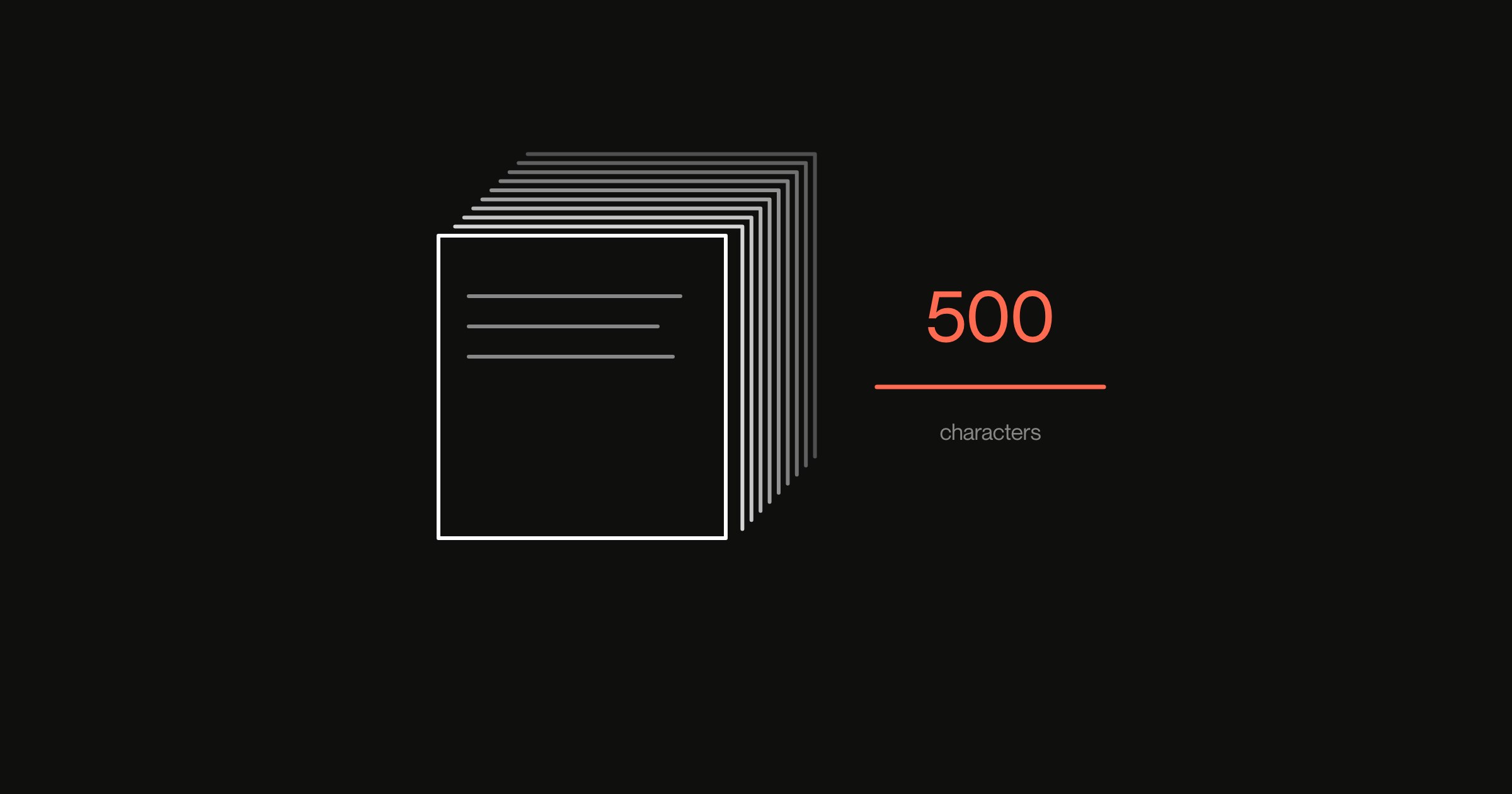
Canva lets a company turn its brand guidelines into a short brand voice, so that its AI writing tool can follow it. There is a box for it in the Brand Kit, and the box takes 500 characters.
That is roughly the length of this paragraph and the one above it. Yet for many companies, it is now the most-used part of their brand guidelines.
The forty-page tone of voice chapter still exists, of course. It has the do-and-don’t tables, the personality sliders and the sample headlines. But it sits in a PDF somewhere, while the 500 characters shape the words that actually go out.
Most of your brand is made by people who never read the brand guidelines
Agencies like ours wrote brand guidelines for a particular reader. That reader was a trained designer, briefed by a brand team, working on a few important pieces. They still exist. However, they now make a small share of the output.
Canva reported more than 265 million monthly users and 31 million paying ones by the end of 2025. It also says that 95% of the Fortune 500 use it. In March 2025 alone, people created a billion designs, according to Campaign India.
Think about what those designs are. They include sales decks, event banners, recruitment posts and product one-pagers. Salespeople, recruiters and founders make them, along with the marketing exec who has forty minutes before the webinar.
More and more often, a machine is in the loop as well. Salesforce’s latest State of Marketing research found that 75% of marketers have adopted AI. Also, 78% say they need more personalised content than they can produce. So your brand gets reproduced at a volume no review process can handle, by tools that have never opened your guidelines.
The tools are asking for rules
What has changed in the last two years is simple. The tools now want your brand as an input, and they are quite specific about the format.
For example, Canva lets admins lock elements in a template, either fully or by position only. Its AI then leaves those elements alone when it makes new designs.
Adobe’s GenStudio goes further. It takes your uploaded guideline files and uses AI to pull out the voice, channel and image rules. It then checks each piece of content against them and lists what to fix.
Figma Make, meanwhile, gives every file a guidelines file of written rules for its AI. It also warns that more context isn’t always better, because it can confuse the model.
Underneath all this, the plumbing has grown up. Design tokens are the named values for colour, type and spacing that started in Salesforce’s design system team. In October 2025 they got their first stable shared format, through a W3C community group. Figma, Sketch, Penpot and Framer are among the tools that support it.
GOV.UK even tells its teams not to copy hex values at all. Instead, they call each colour by name, so that a palette change reaches every service on the next update.
Put all that together and the shape of a modern brand system is clear. It works less like a book and more like a set of instructions that software can follow.
A rule nobody can enforce is a suggestion. A rule a tool can read is a brand.
Be suspicious of the consistency numbers
You will often see the claim that consistent branding lifts revenue by 23%, or 33%. So it is worth knowing where it comes from.
The figures trace back to Lucidpress surveys, which asked brand professionals what growth they would expect from consistency. In other words, they are guesses from people whose jobs depend on consistency. A company that sold brand templating software published them, too.
The more useful number in the same research is duller: 81% of organisations said they deal with off-brand content. That is the real case for systems. A PDF can describe a brand perfectly and still enforce nothing.
Lock the boring parts so you can free the rest
There is an obvious danger here, and it is the one designers worry about most. Systematise everything and you get a brand that is consistent and lifeless.
Fashion spent the late 2010s “blanding” its logos into near-identical sans serifs. Burberry was one of the best known, and it reversed course in 2023 by bringing its knight back.
Brad Frost, author of Atomic Design, made the sensible point years ago. A good system should deliberately leave room for looser patterns where creative risk belongs. So the aim is to choose carefully what gets locked.
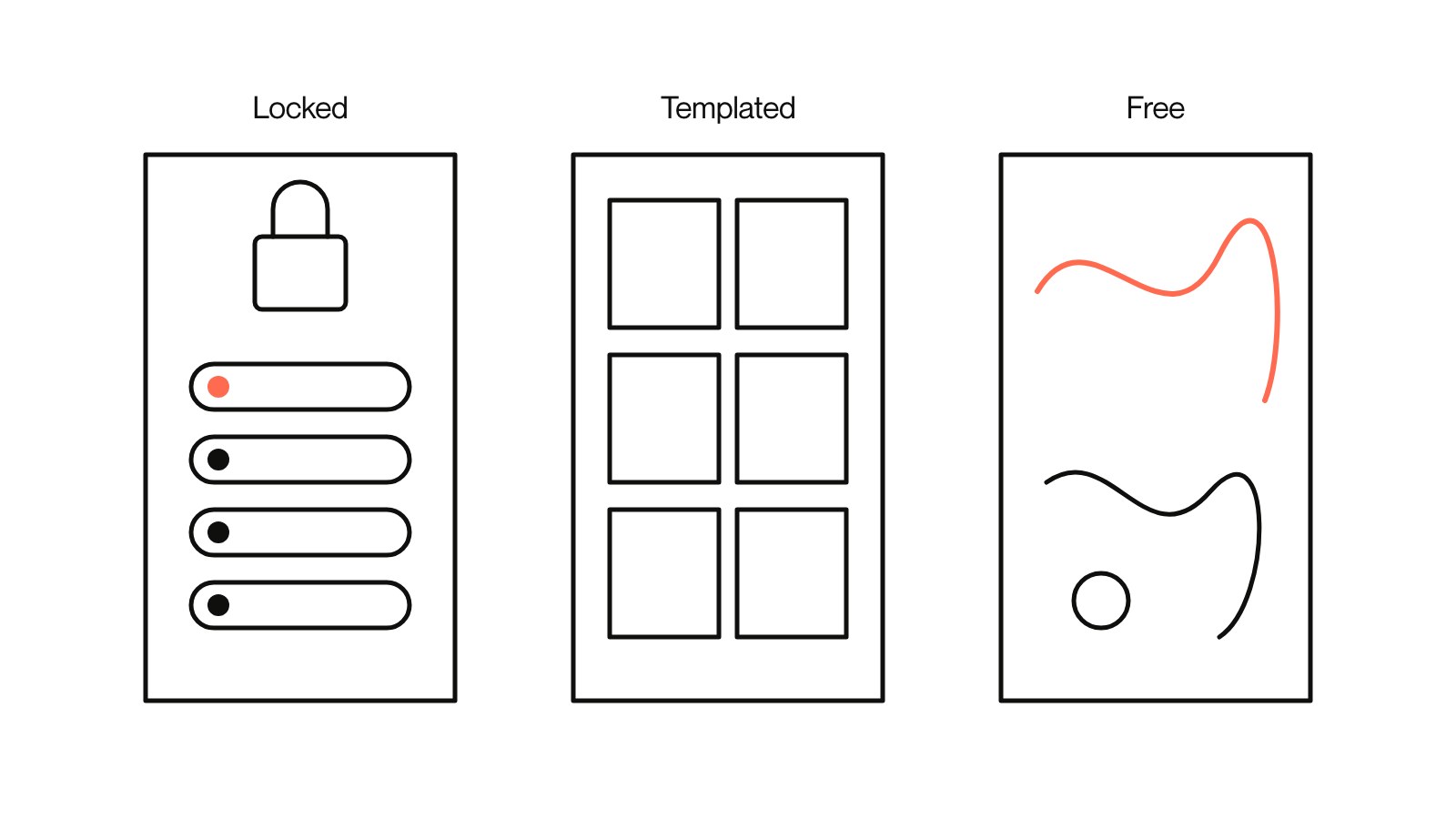
That is why we now write brand guidelines in three layers, and why we suggest clients do the same.
Three layers: locked, templated and free
The locked layer is everything a tool should never get wrong. That covers the logo and its clear space, colour pairs that pass contrast, type sizes and the design tokens. All of it lives in code and in template locks rather than prose. Nobody should be able to make the logo purple, and no AI should be invited to try.
The templated layer is the everyday work, such as decks, social formats, one-pagers and email. We build these as components with sensible defaults. As a result, the forty-minute deck a salesperson makes comes out on brand without them having to think about it.
The free layer is where distinctiveness lives. It holds campaign ideas, hero imagery and the headline that makes someone stop. It gets principles and examples rather than rules, and it stays with people who have judgement. This is the work taste is for, and it is the work tools do worst.
Write the 500 characters on purpose
Next, sit down and write the short version deliberately, because people will use it far more than the long one. If your tone of voice has to fit in 500 characters, which 500?
Not a list of adjectives, since every brand claims to be “clear, confident and human”. Instead, write what you do that a competitor wouldn’t, and the words you never use. Then add one example sentence that could only be yours.
It is a surprisingly hard exercise, and a revealing one. Many brands find their forty pages compress into nothing in particular.
The brand book was a document. Your brand guidelines now need to be a system that people and software can both follow. After all, both of them are making your brand already, whether or not anyone has written the rules down.